
What if the improvements you assume will add value matter less to a Success buyer than a home that feels well cared for and ready to enjoy? If you’re deciding where to invest before selling or renovating, understanding what increases property value in Success starts with matching the work to local buyer priorities, not simply choosing the biggest project.
It’s natural to want your property to stand out while questioning whether an upgrade will make a meaningful difference. Presentation improvements, such as creating a clean, inviting first impression, are a different commitment from a major renovation. Weigh each against the home’s current condition and comparable properties before deciding what to do.
This guide explains how to prioritise improvements, from practical presentation steps to larger projects that may need planning consideration. You’ll learn how to weigh buyer appeal against the scale of the work, and why local market insight can help you make a considered decision. Regal Gateway Property’s knowledge of Success and the City of Cockburn can help you assess your property’s position without treating any improvement as a guaranteed price increase.
Key Takeaways
- Learn what increases property value in Success by assessing your home against local buyer priorities, not by assuming every upgrade pays off.
- Separate essential maintenance and presentation improvements from larger renovations before committing time or budget.
- Compare possible upgrades by their relevance to buyers, the disruption involved and the evidence supporting the decision.
- Use a considered sequence to identify visible issues, check local market evidence and refine your property’s presentation.
- A local sales appraisal can help you weigh comparable properties and buyer feedback when deciding what to do next.
What increases property value in Success, WA, and what buyers notice first
Property value isn’t a fixed measure attached to a home. It reflects what buyers are prepared to pay in a particular market, based on the property’s features, condition and position alongside other homes available at the time. In Success, within the City of Cockburn, assess your property against relevant local sales and current buyer feedback rather than relying on broad renovation advice or assumptions about what buyers want.
A value improvement is a change that makes a property more appealing or functional in a way that aligns with its market. It may improve a buyer’s impression, but it doesn’t guarantee a higher sale price. Presentation, upkeep and functionality can help a home compete; comparable properties and buyer demand help frame its potential market value.
How Success buyers may assess a home
At a viewing, buyers can quickly notice whether a home feels cared for and whether its spaces work comfortably for everyday use. Peeling paint, a dripping tap or a sticking door may distract from otherwise appealing features. Clear access through living areas can help buyers understand how the home functions. These are practical observations, not proof that every Success buyer values the same features.
To understand local preferences, look at recent comparable Success sales and agent feedback. Check that the properties are genuinely similar in relevant ways, including condition, layout and features. Without that evidence, treat claims about local buyer preferences as possibilities, not established market trends.
Market value, presentation, and renovation are not the same
A tidy garden, clean windows and uncluttered rooms can create a more welcoming viewing experience without changing the home’s underlying attributes or guaranteeing a different appraisal. Renovations may change a property’s condition or functionality, but their relevance depends on the home, the work completed and how buyers assess the result.
An appraisal considers buyer demand alongside comparable properties, including differences in location, condition and features. A nearby sale can offer context, but it isn’t a direct price promise for another home.
For a practical first look, assess the property through a buyer’s eyes, then separate observable issues from assumptions about what would add value:
- Condition: Note visible wear, unfinished repairs and maintenance concerns that could draw attention during a viewing.
- Presentation: Consider whether rooms feel clean, bright and easy to understand, and whether outdoor areas appear cared for.
- Function: Check that doors, storage and everyday living areas are usable, rather than focusing only on decorative finishes.
- Evidence: Compare the home with relevant Success sales and feedback before treating a particular upgrade as a local priority.
This evidence-led approach brings the question of what increases property value in Success into sharper focus. The aim isn’t to renovate for its own sake, but to identify improvements that suit the home and make sense against its likely market. Local sales appraisal advice can help owners consider comparable properties and buyer feedback before deciding what to do next.
Which home improvements can strengthen property value in Success?
The most sensible improvement depends on what the property needs, how it’s likely to be used and what comparable homes and buyer feedback indicate. A simple repair may deserve attention before a stylish upgrade if a visible defect distracts from the home’s strengths. Consider three categories: maintenance that addresses wear or faults, presentation that helps rooms and outdoor areas feel cared for, and renovation that changes finishes, layout or functionality.
Well-maintained, functional presentation can support buyer appeal, but no single improvement guarantees a higher sale price. Use these examples as areas to assess, not a checklist every Success property must complete.
- Maintenance: Address visible issues such as damaged paint, leaking taps, faulty lights or doors that don’t close smoothly.
- Presentation: Review cleanliness, paint condition, lighting and garden upkeep so the home feels considered and easy to view.
- Renovation: Consider changes to kitchens, bathrooms, storage or outdoor areas only where the current condition or functionality calls for them.
Start with maintenance and presentation
Walk through the home as if seeing it for the first time. Note repairs that are immediately noticeable, clean surfaces and windows, and check whether lighting feels suitable in key rooms. Outside, look at the entry, paths and garden edges. These steps won’t change the home’s underlying attributes, but they can prevent avoidable distractions and help buyers focus on its layout and features.
Consider kitchens, bathrooms, storage, and outdoor spaces carefully
A full renovation isn’t the only option if a room feels dated. Depending on its condition, a focused refresh might involve improving worn finishes, making storage easier to use or addressing a feature that affects everyday function. In a kitchen or bathroom, consider usability as well as appearance. In outdoor areas, assess whether the space feels accessible and connects naturally with the home.
The right scope depends on the property type and what buyers are responding to in comparable Success homes. Before committing to a larger project, use verified local sales and agent feedback to test whether the proposed work addresses a real buyer concern, rather than simply following a national trend.
Research can help frame questions, but location matters. The National Association of REALTORS’ home improvement ROI resource discusses remodelling impact in its own market; its findings shouldn’t be treated as a forecast for Success. Use it as wider context, then weigh any idea against local evidence, your home’s current condition and your intended sale strategy.
A local sales appraisal can help relate your property’s condition and features to comparable homes. Regal Gateway Property’s local property sales guidance can help you consider which improvements merit attention before you decide on a project.
How to compare value-adding upgrades with doing nothing
Before committing to work, compare each option with the property’s current condition and the evidence for making a change. An upgrade can improve appearance or function, but that doesn’t mean it will return more than it consumes in money, time and disruption. Sometimes the most considered choice is to maintain the home and present it well, rather than redesign it for an assumed buyer.
Use this framework to make the trade-offs visible. The “evidence needed” column points to what would help you decide, not a guarantee that the work will affect a sale outcome.
| Option | Current condition | Buyer relevance | Disruption | Evidence needed |
|---|---|---|---|---|
| Keep as-is | Generally sound, with no pressing visible issues. | May suit buyers who value the existing layout and finishes. | Minimal; focus on routine care and presentation. | Compare with similar Success homes and note any clear differences. |
| Maintenance | Wear, minor faults or unfinished repairs are noticeable. | Can address distractions that may affect a viewing impression. | Usually focused on specific issues, depending on the work. | Document the issue and assess its visibility and function. |
| Cosmetic refresh | Surfaces or finishes look tired, but remain usable. | May help rooms feel more cared for without changing their layout. | Varies with the rooms and scope involved. | Look for comparable homes and feedback about presentation. |
| Targeted upgrade | A particular feature limits usability or feels out of step with the home. | Potentially relevant if the change addresses a demonstrated concern. | Can affect use of the area while work is underway. | Identify the buyer need the upgrade is intended to meet. |
| Larger renovation | Several features or the overall layout may need substantial change. | Depends on the property, likely buyers and local alternatives. | Greater scope may mean more planning and disruption. | Assess comparable sales, buyer feedback, feasibility and timing. |
A practical test before committing to an upgrade
Ask whether the proposed work fixes a visible issue or responds to buyer feedback, rather than simply reflecting personal taste. Then compare the home with recent, genuinely similar Success sales where available. Differences in location, condition and features matter. Finally, consider whether the work can be completed and presented appropriately within your intended sale timeline.
Generic renovation advice can prompt ideas, but it can’t establish what suits a specific Success property. Use local evidence to prioritise, and treat broad recommendations as possibilities to test.
When maintaining the property may be the wiser choice
If the home is functional and well cared for, extensive redesign may add disruption without addressing a demonstrated buyer concern. Highly personal finishes can also narrow appeal if they don’t suit a buyer’s taste. A discussion informed by a sales appraisal can help you consider the property alongside comparable homes before deciding whether major work is justified.
A locally grounded perspective can help put your property and improvement priorities in context through a local property appraisal team.
How to prioritise property improvements before selling in Success
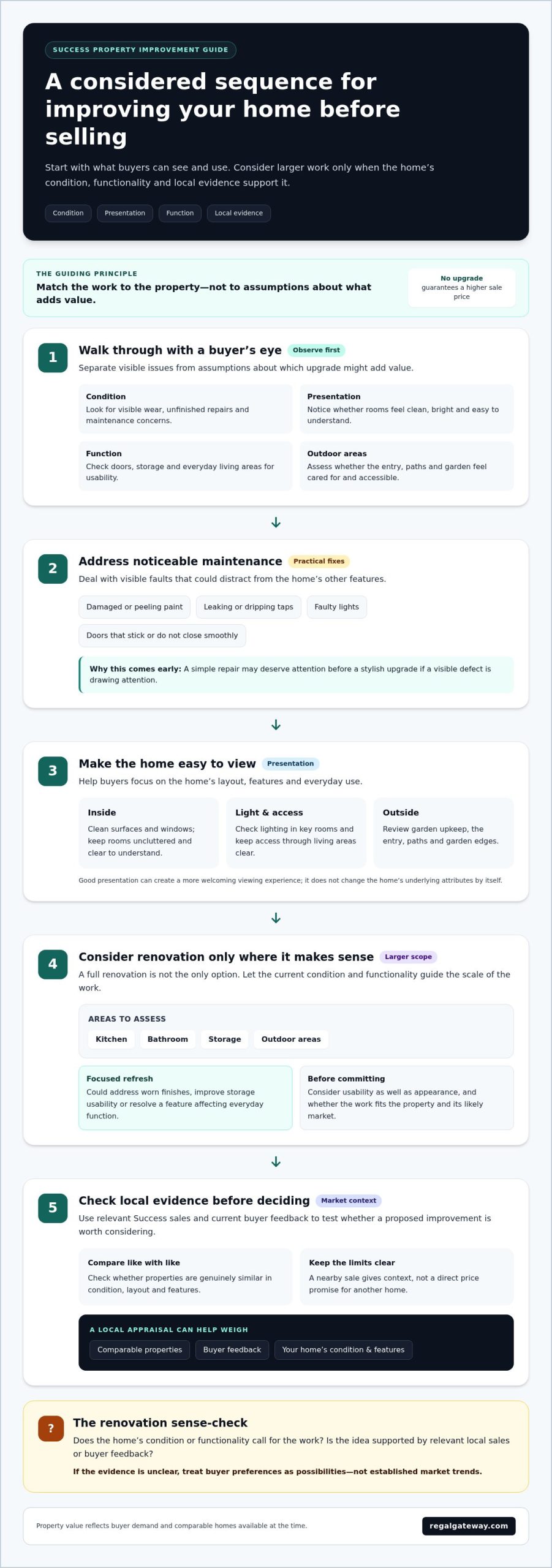
A clear sequence can help you distinguish work that prepares your property for sale from upgrades that may not suit its condition or likely buyers. Begin with what you can observe, then use local evidence to guide decisions. This keeps the plan centred on your home rather than a generic renovation checklist.
Create a property-specific improvement shortlist
Walk through the home as a prospective buyer might, recording visible condition issues, awkward or limited functionality, and aspects of presentation that could distract at a viewing. Rank each item by how noticeable it is and whether comparable-property evidence or buyer feedback supports addressing it. This shortlist helps separate priority maintenance from optional enhancements.
- Inspect the property. Review each room, entry and outdoor area, noting defects, incomplete work and features that are difficult to use. Keep notes specific, such as “hall light doesn’t work” rather than “hallway needs improvement.”
- Identify priorities. Separate urgent maintenance from cosmetic preferences and larger optional projects. Consider whether an issue affects the home’s function, is clearly visible, or may draw attention away from its strengths.
- Check local evidence. Compare genuinely similar Success properties, paying attention to differences in condition, layout and presentation. Current local feedback can help test an assumption, but broad renovation advice alone doesn’t establish what nearby buyers value.
- Plan the work. Decide which items are proportionate to the property and your intended sale timeline. Structural changes or work that may require approval call for appropriate advice. Verify applicable planning guidance with the City of Cockburn and relevant Western Australian sources before proceeding.
- Review presentation. Once priority work is complete, look at the home afresh. Check whether rooms feel orderly, features are easy to appreciate and any remaining visible issues need attention before marketing.
Use local sales evidence to refine the plan
Comparable sales are most useful when the properties genuinely resemble yours, rather than simply sharing a suburb. Note differences in condition and presentation, then consider whether they help explain buyer response. An appraisal can provide local context for weighing your shortlist, while feedback helps distinguish a real concern from a personal preference.
For broader preparation and selling considerations, the existing guide Sell My House in Cockburn WA can complement this property-specific process. The central question is not simply what increases property value in Success, but which improvements make sense for this home, given its condition and the local evidence available.
For local context, discuss your Success property with Regal Gateway Property. A sales appraisal can help you consider comparable properties and buyer feedback as you shape a measured plan, without promising a particular sale result.
Get a local appraisal before deciding what increases your Success property value
Once you’ve identified possible improvements, a local sales appraisal can help put them in context. It gives you an opportunity to discuss your property’s condition and features alongside comparable sales and current buyer interest in Success. That perspective can help distinguish work that may address a meaningful point of difference from a project that is simply appealing in isolation.
What a local appraisal can help you understand
An appraisal discussion considers comparable properties, the condition and presentation of your home, and buyer interest relevant to the market at the time. It isn’t a guarantee of a future sale price, and it can’t promise that a particular improvement will increase the amount a buyer offers. Its value lies in providing informed local guidance for your decision-making.
For a more useful conversation, outline the work you’re considering and when you hope to sell. For example, if you’re weighing a cosmetic refresh against a larger alteration, sharing both options and your intended timing gives the discussion practical context. Regal Gateway Property’s local knowledge across Success and the City of Cockburn can help owners consider their plans in relation to comparable properties and buyer feedback. That local perspective also connects Success with nearby communities including Atwell, Aubin Grove, Wandi, Hammond Park, Treeby and Mandogalup.
Turn property insight into a considered next step
Keep your shortlist focused: maintain what matters to the home’s condition, improve features that affect buyer appeal, and verify major decisions before committing. You don’t need to transform every room. The right course depends on the property, its current state and the evidence available in its local market.
For broader suburb context, the guide Success WA: Your Comprehensive Guide to Living and Investing in 2026 can complement a property-specific appraisal discussion. It helps frame your home within the wider Success setting, while a sales appraisal focuses on how the individual property relates to comparable homes and current buyer interest.
If you’re considering selling, a measured conversation can help you decide what deserves attention and what can remain as it is. Regal Gateway Property offers sales appraisals for homeowners in Success, with local insight to support your next steps, not a promise of a particular result.
Request a Success property appraisal to discuss your home, planned improvements and intended timing.
Make your next property decision with confidence
The most useful next step isn’t necessarily a renovation. It’s a clear view of how your home fits the market and which decisions are worth exploring before you commit time and resources. Asking what increases property value in Success is the beginning of a property-specific conversation, not a reason to assume every improvement will deliver the same result.
Regal Gateway Property is an independent boutique agency with local knowledge across Success and the City of Cockburn. The award-winning agency’s residential sales and sales appraisal services can help you consider your property in the context of local comparables and buyer interest, while keeping your plans grounded in your own goals.
Whether you’re preparing to sell soon or weighing up future improvements, a considered appraisal can bring greater clarity to the choices ahead. Request a local property appraisal from Regal Gateway Property and take your next step with a clearer understanding of your home’s position.
Frequently Asked Questions
What adds the most value to a property in Success, WA?
There’s no single upgrade that adds the most value to every Success home. The answer depends on the property’s condition, layout and presentation, as well as comparable sales and current buyer demand. To assess what increases property value in Success, identify the home’s clearest drawback, then check whether similar local properties suggest it matters to buyers. Generic renovation lists can offer ideas, but they can’t prescribe the right project for your home.
Can painting increase the value of a house in Success?
Fresh paint can help a house present as cared for, but it doesn’t guarantee a higher sale price. Consider whether the existing finish is visibly worn and whether repainting would create a consistent impression between rooms. For instance, refreshing a scuffed hallway may address a clear presentation issue, while repainting sound surfaces may be less compelling. Compare similar Success homes to understand how your property presents against local alternatives.
Should I renovate my kitchen before selling in Success?
Not necessarily. First consider whether the kitchen works for everyday use and whether its condition is likely to concern buyers. A worn cupboard finish or poorly organised storage may call for a more focused response than replacing the entire kitchen. Look at similar Success properties and relevant buyer feedback before choosing a scope. A local appraisal discussion can help you weigh the kitchen’s current state against the rest of the home.
How much can renovations increase my property value in Success?
There’s no reliable increase that can be promised without assessing the individual home and market conditions. The outcome depends on the renovation, the property’s starting point, comparable sales and buyer demand when you sell. Rather than relying on a general percentage, write down the specific change you expect the work to achieve, then test that expectation against local evidence. This can help you avoid treating renovation expenditure as a guaranteed return.
Is landscaping worth doing before selling a home in Success?
Landscaping may be worthwhile if outdoor areas look neglected or make the home harder to enjoy, but extensive redesign isn’t automatically necessary. Start by considering how the garden appears from the entry and main living areas, and whether paths and outdoor spaces feel usable. A tidy, maintained yard may be sufficient for one property, while another may need more attention. Use local buyer feedback to decide whether further work is justified.
What should I fix before selling my house in Success?
Start with issues that could make a buyer question the home’s upkeep or interfere with everyday use. Examples include a loose handle, a non-working light or a door that sticks. Keep a written list and group items by urgency, so minor cosmetic preferences don’t distract from repairs that affect function. Then review the list in the context of your sale plans and seek local advice before taking on substantial work.