
For an Atwell rental, the required Western Australian document is Property Condition Report (Form 1); according to Consumer Protection WA, the landlord must give the tenant two copies within seven days of moving in. The tenant should return one completed copy within seven days of receiving it. A property condition report records the home’s condition, giving both parties a reference point for the tenancy.
A property condition report in Atwell may look straightforward, but the details matter. Clear notes and dated photographs record the condition of rooms, fixtures and fittings at the start of a tenancy. This baseline is useful at the final inspection, especially if there’s a disagreement about whether damage was already present.
This guide explains what a property condition report in Atwell covers, what to record and how the move-in form connects with the final inspection. You’ll also learn what to consider when choosing a qualified professional for a broader property condition assessment, and how Regal Gateway Property’s residential sales and property management expertise fits into making informed decisions about a home.
Key Takeaways
- Choose a professional whose relevant expertise fits the assessment, and clarify the property areas and systems the report will cover.
- At the end of a tenancy, document the property’s condition again and give the tenant a reasonable opportunity to attend the final inspection.
- Record visible damage, defects and potential hazards clearly, using dated photographs to support written observations.
- Use the findings to distinguish immediate repairs from longer-term maintenance priorities and inform decisions about the property.
Choosing a qualified report professional
Start by identifying the decision the report needs to support. A rental entry report records visible condition for a tenancy, while a broader property assessment can examine building components and systems. Property condition reports are typically conducted by licensed professionals such as engineers, architects or consultants. Match the professional’s expertise to the assessment, rather than treating every report as interchangeable.
Before arranging a broader assessment, define the property and scope in writing. An owner planning maintenance may need observations on structural elements, mechanical systems and environmental concerns. A buyer considering an older home may want a focus on visible defects, moisture concerns and outdated systems. A clear scope helps keep the assessment relevant to your decision.
Review the proposed process, not just the report’s title. Ask which areas will be inspected, how findings will be recorded and whether photographs will support key observations. Clarify whether the assessment covers accessible areas only or discusses systems that need specialist assessment. These details affect how useful the report will be for maintenance planning or a property transaction.
- Relevant expertise: Check that the professional’s background suits the building and the report’s purpose.
- Clear scope: Specify the rooms, building elements and systems you want assessed.
- Evidence: Look for dated observations, photographs and plain descriptions of defects.
- Usable findings: The report should distinguish observed conditions from recommended follow-up.
If available, review a sample report. A useful example describes a specific observation, such as staining beneath a window, rather than relying on a vague label like “poor condition”. It should identify where the issue appears and what further attention may be appropriate. A possible safety hazard or outdated system can help guide decisions about specialist review and maintenance priorities.
Check that the final document serves its original purpose. A clearly scoped report gives owners, buyers and property managers a practical basis for planning. It should not be confused with a repair quotation or a rental entry report.
Final inspection and moving out
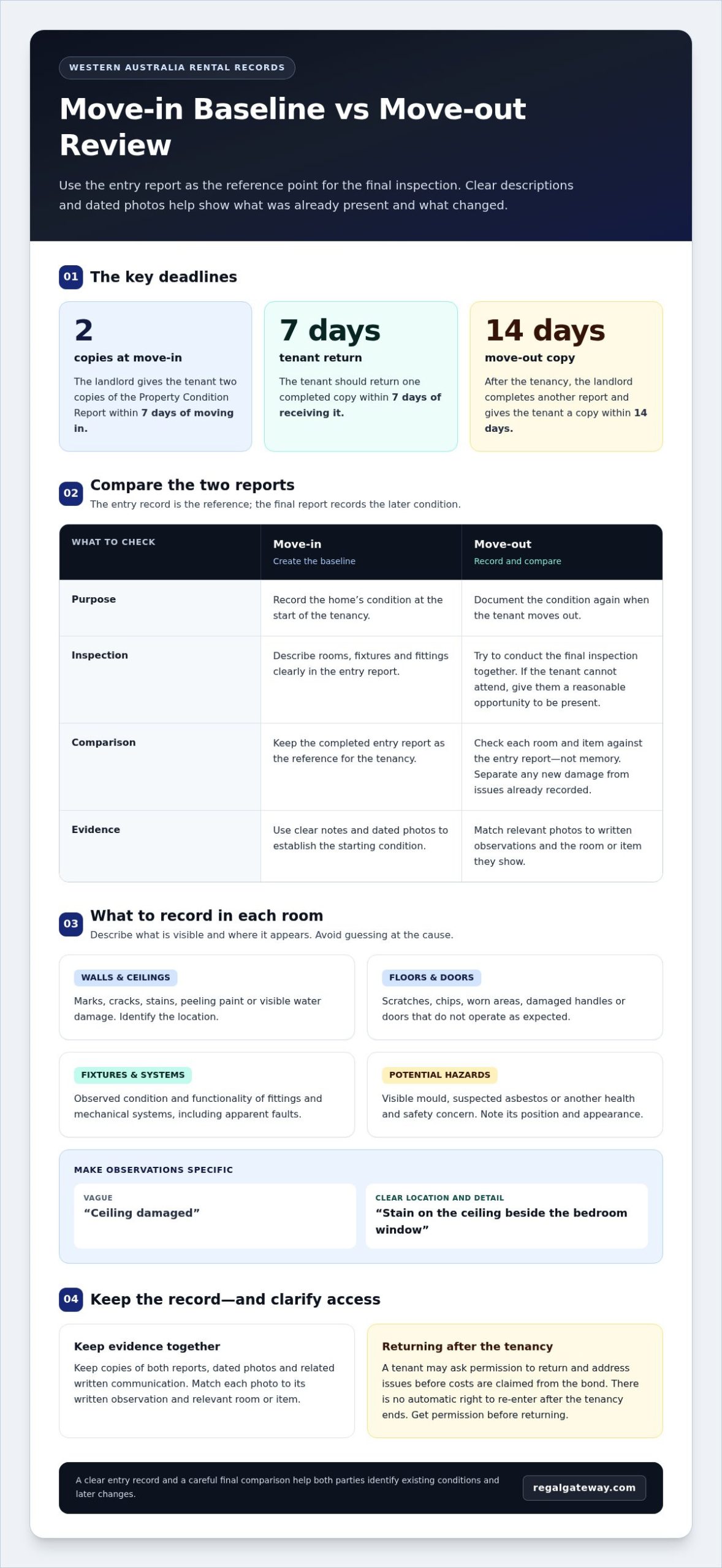
In Western Australia, the landlord must provide the tenant with two copies of the property condition report within seven days of the tenancy starting. The tenant should return one completed copy within seven days of receiving it. These move-in records form the reference for assessing the property at the end of the tenancy.
When a tenant moves out, the landlord must complete another property condition report and give the tenant a copy within 14 days. Landlords and tenants should try to conduct the final inspection together. If the tenant can’t attend, the landlord must give them a reasonable opportunity to be present.
At the final inspection, compare each room and item with the entry report rather than relying on memory. Check, for example, whether a wall mark was already recorded, and note any new damage separately. Identify the room and item, describe the condition and include a relevant photograph. Specific records help distinguish an existing defect from a change noticed later.
- Walk through systematically: Review rooms, fittings and included items against the entry report.
- Describe observations: Note the location and nature of each change, rather than writing “damaged”.
- Keep evidence together: Match photographs to written observations and the relevant room.
- Discuss discrepancies: Give both parties an opportunity to identify differences during the inspection.
After the tenancy ends, a tenant may ask the landlord for permission to return and address issues before costs are claimed from the bond. There is no automatic right to re-enter the property after the tenancy ends. Get permission before returning; don’t assume access is available.
Keep copies of both reports, photographs and related written communication. A dated record of an agreed repair, or a note that an issue remained unresolved, makes the timeline easier to follow. For landlords, Regal Gateway Property’s management service includes coordinating tenancy records and inspection arrangements as part of overseeing a rental property.
Items and damage to record
A Western Australian rental property condition report should describe the property’s physical condition and functionality. Record each room, fixture and fitting, including visible damage, defects and potential hazards such as mould or asbestos.
Take dated photographs to support the report. Keep the completed copy and images together, matching each photograph to the relevant room or item. This gives the written observations useful context.
- Walls and ceilings: Note marks, cracks, stains, peeling paint or visible water damage, and identify the location.
- Floors and doors: Record scratches, chips, worn areas, damaged handles or doors that do not operate as expected.
- Fixtures and systems: Describe the observed condition and functionality of fittings and mechanical systems, including any apparent fault.
- Potential hazards: Note visible mould, suspected asbestos or another health and safety concern, with its position and appearance.
Use precise descriptions instead of broad labels. “Stain on the ceiling beside the bedroom window” is more useful than “ceiling damaged”. Describe what you can see without guessing at the cause. A broader assessment may also flag an issue such as a roof that could need replacement within five years, helping with longer-term maintenance planning.
Use the same method for each observation: name the room, identify the item, describe its condition and attach a dated photograph. For example, note “small chip on the bathroom vanity edge” and include an image showing its location. Record whether a feature appears to work; if it does not, describe the issue plainly. Complete every relevant section.
Compare your observations with the landlord’s report and add clear comments where they differ. Keep the dated images with your completed copy. An item-by-item record helps distinguish pre-existing wear from damage noticed later and gives both parties a clearer account of the property’s starting condition.
Property Condition Report form
For Western Australian rentals, the prescribed form provides a consistent record of the property’s condition. Complete it accurately, as later comparisons rely on the observations recorded at the start of the tenancy.
Using the Property Condition Report Form
Western Australian rental property condition reports must use Property Condition Report (Form 1), according to Consumer Protection WA. The form records the property’s condition at the start of a tenancy, room by room, including fixtures and fittings. Its structured layout helps tenants and landlords describe the same areas consistently. Use its fields to record visible defects clearly, then attach dated photographs that identify the relevant room or item.
Disputing or Amending the Report
To dispute or amend an entry, add a clear written comment describing the difference and the relevant location. For example, if a report describes a wall as clean but shows a visible mark, note the mark’s position and keep a dated photograph. A tenant should return one completed copy within seven days of receiving the report. Retain a copy and supporting images so both accounts remain available for later comparison.
A missing or inaccurate report can leave uncertainty about the property’s original condition. That makes it harder to distinguish pre-existing wear from damage identified later, particularly during a bond discussion. Keep the form, written comments and photographs together as a consistent record.
Report Costs in Atwell
The cost of a property condition report in Atwell depends on the property and the requested scope. Factors include the property’s size, accessibility, the areas assessed and the level of detail required. The price depends on the case and is given after a quote request. Clarifying whether you need a tenancy record or a broader assessment helps define the work and its cost.
For support overseeing a rental property and its tenancy records, discuss your property management needs.
Regal Gateway Property: Residential Property Sales
Regal Gateway Property can help with your next step in selling or managing a residential property. If a report highlights maintenance considerations, use those observations to inform sale preparations or organise tenancy records as a landlord.
For owners preparing to sell, Regal Gateway Property’s residential sales service can support the sale process. Landlords can use its property management service to oversee a rental, including rent collection, maintenance coordination and regular inspections. The agency also provides tenant selection and screening. These services support different stages of residential ownership, from preparing a home for sale to managing an ongoing tenancy.
Use the report to clarify your questions and priorities before discussing your property plans. For guidance on the next step, contact Regal Gateway Property.
Make your next property decision with clarity
A condition record can do more than document a home’s state at one point in time. It can help you prioritise maintenance, keep essential records and consider how the property fits your wider plans. Use it as a practical reference when preparing for a tenancy, considering a sale or planning future upkeep.
If a property condition report in Atwell raises questions about what to do next, connect its findings with your priorities for the home. A considered plan can help you make informed decisions about a tenancy, sale or ongoing property management.
For a conversation about your residential property plans, contact Regal Gateway Property. Let your next step begin with a clear sense of what matters most.
Frequently Asked Questions
What Is a Property Condition Report?
A property condition report is a written record of a property’s observable state at a particular time. It can establish a baseline for tenancy records or support broader property planning. A note about a sticking window, for example, helps show that the issue was present at the time of inspection. The report records observations; it is not a repair quotation or a guarantee about hidden conditions.
What is a property condition report in Western Australia?
For a Western Australian rental, the report is the prescribed tenancy record, Property Condition Report (Form 1), according to Consumer Protection WA. It documents the home’s condition for the tenancy rather than serving as a general building certification. That distinction matters: a tenant’s notes about a loose cupboard hinge can clarify the tenancy record, while a separate assessment may be needed to investigate the cause.
Who prepares the property condition report for a rental in Atwell, WA?
Completing the rental property condition report is an important part of preparing the property for a tenancy. If the landlord uses a property manager, the manager may handle the tenancy paperwork on their behalf. Tenants should add comments where their observations differ. For example, note an already-torn flyscreen on the report rather than relying on memory later.
How does a property condition report differ from a routine inspection or final inspection?
A condition report records the property’s state at a specific point in the tenancy; a routine inspection checks on the home during the tenancy. A final inspection takes place as the tenancy ends and records the property’s condition then. A routine inspection might identify a maintenance issue to follow up, while the final inspection focuses on the end-of-tenancy condition and relevant records.